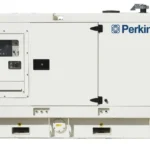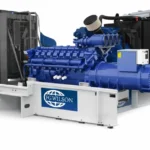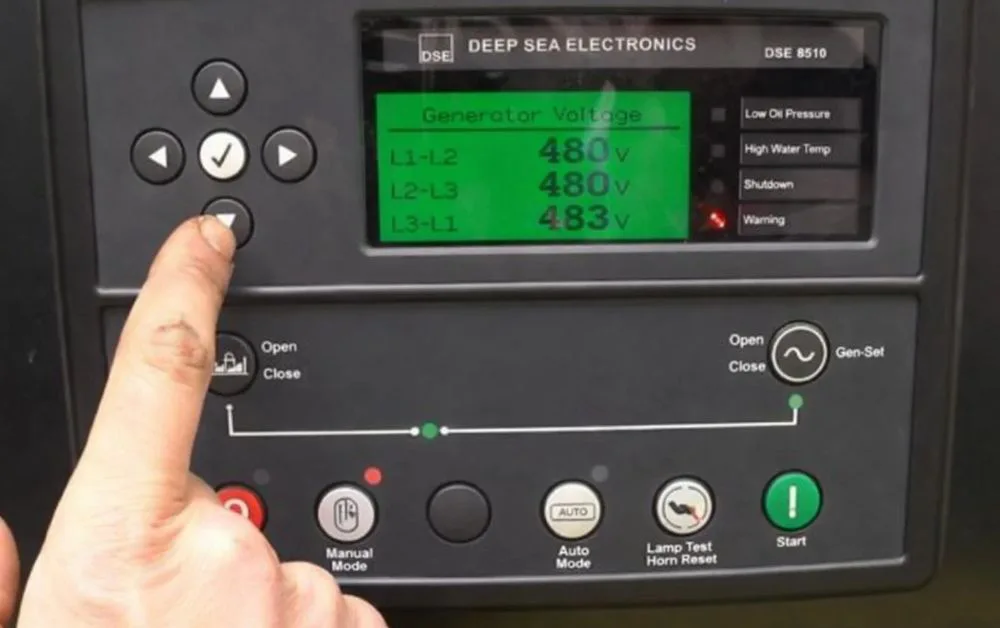
Your choice of Generator Control Panels is pivotal in ensuring reliable power continuity, especially in critical environments. Be it to support a commercial facility, an industrial site, or residential backup, familiarity with the differences between manual and automatic control schemes could save you from expensive downtime, risks, and inefficiencies.
Here, we will examine the crucial features of manual and automatic control panels, outline key advantages and limitations, and walk you through selecting the right approach while pointing to the very reliable power solutions provider, Laurus Technologies LLC, a leading distributor in Doha, Qatar, specializing in advanced power solutions with a strong emphasis on diesel generators.
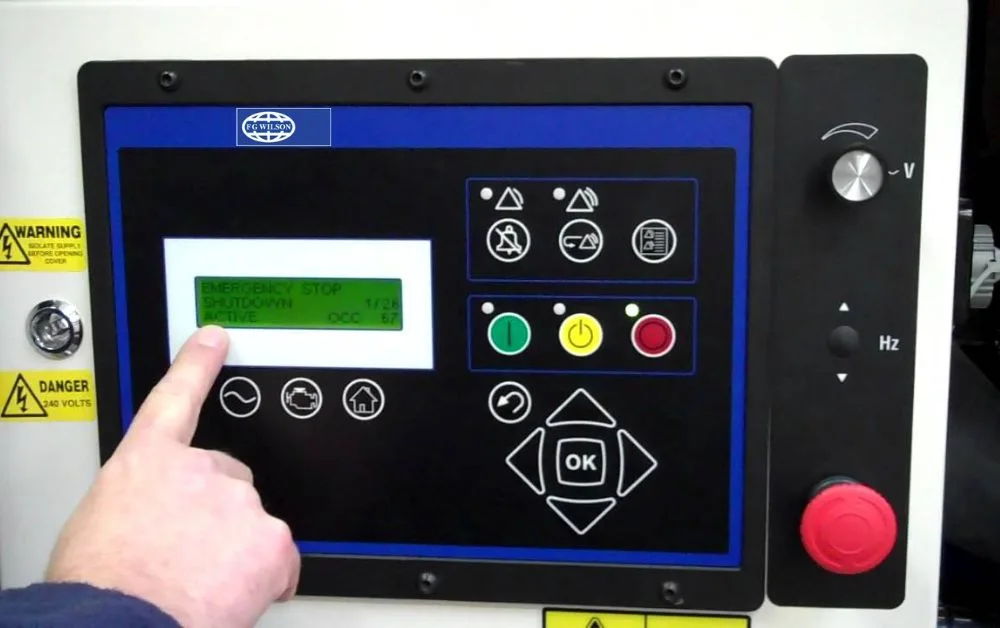
Manual Generator Control Panels
A manual generator control panel refers to one where the transfer of loads, startup, or switching of the system is handled by human intervention. Consider what happens if the mains fail: the operator has to start the generator manually, perform the manual shifting of the load, and then switch back manually once utility power is back.
Key strengths of manual panels
- Cost-effectiveness: Manual systems are usually cheaper to purchase and install since the components involved are simpler.
- Simplicity: Fewer moving parts and less automation mean fewer things that can go wrong, in theory.
- Control: The operator has direct control and awareness of load transfer. This would be applicable to smaller installations or where outages are infrequent.
Limitations of manual panels
- Delay and Risk: The switch functions on the availability of a person, so a delay in intervention may cause an outage or damage to sensitive equipment.
- Operational burden: there needs to be somebody available and trained to do the switching safely.
- Not ideal for critical loads: If power continuity is paramount, like data centres, hospitals, and industrial production lines, manual control does not meet the required risk tolerance.
When manual control makes sense
- Locations with few power outages and where a person is usually onsite.
- Smaller buildings, or non-critical auxiliary loads, where the cost premium of automation is not justified.
- Circumstances under which manual monitoring is acceptable, and the risk of delayed transfer is low.
Automatic Generator Control Panels
An automatic control panel (often incorporating an Automatic Transfer Switch or ATS) continuously monitors utility power, and upon detection of an outage, automatically initiates the generator startup and load transfer. When regular power returns, it switches back without manual intervention.
Key advantages of automatic panels
- Rapid Response: Power failures are automatically detected and switched to diesel generator backup in less than a few seconds for minimal downtime.
- Hands-free operation: No manual intervention is required, which is very useful for remote sites or unmanned locations.
- High reliability for critical-load environments: ideal for installations where any interruption is costly or hazardous, such as hospital equipment and manufacturing lines.
Drawbacks to consider
- Higher cost: either regarding the equipment itself, sensors, controllers, ATS, or installation/commissioning.
- Complexity: The more components, the more potential maintenance and specialized technical support are usually needed.
- Over-spec’ing risk: The premium may not be worth it for small loads or rarely used generators.
The ideal situations for automatic control
- Applications where downtime is measured in losses of revenue, data, safety, or regulatory compliance.
- Remote sites, or unmanned locations, where manual activation is not practical.
- Complex facilities with high-value equipment or that require 24/7 reliability.
Comparison at a glance
| Feature | Manual Control Panel | Automatic Control Panel |
| Initial cost | Lower | Higher |
| Response time | Slower, manually dependent | Very fast, automated |
| Operator dependency | Needs human intervention | Least human intervention |
| Suitability for critical loads | Limited | Excellent |
| Maintenance complexity | Simple | More complex tasks may require skilled support |
| Best for | Residential, small business, non-critical loads | Industrial sites, data centres, hospitals, remote sites |
Integrating with your Generator Solution
In the context of diesel-powered backup or standby systems supplied by Laurus Technologies LLC, we see how these control panel choices integrate with the broader ecosystem.
Laurus Technologies LLC provides a wide range of diesel generator sets and power solutions designed for reliability in challenging conditions. Their offerings typically include smart control panels and automatic transfer switch capability, making them well-equipped to handle automatic control panel scenarios. For instance, they tout: “Automatic Transfer Switch (ATS) – Ensures seamless power transfer during grid failure.”
If you’re installing a generator with an associated control panel, you’ll want to know if the panel supports manual mode only, meaning you’ll always have to initiate transfer, or whether it is an automatic controller/ATS-enabled panel, which will elevate your system’s responsiveness and reliability.
Related read:-The Top 5 Features to Look for in a Modern Diesel Generator Control Panel
Which should you choose? Key decision factors
Here are some questions to ask when choosing either a manual or an automatic generator control panel:
1. How critical is uninterrupted power?
If the operations cannot afford any downtime, for example, in medical equipment, data centres, or manufacturing, automation is strongly preferred.
2. How often are outages likely to happen, and how quickly must electricity be restored?
Frequent or extended outages argue for automatic. Rare, brief outages may make manual control acceptable.
3. Will someone always be available to operate the panel?
Automatic is safer in unmanned or remote sites. Manual is feasible if reliable human presence is guaranteed.
4. What is your budget and cost trade-off?
Manual systems have a lower up-front cost but may involve more operational risk. Automatic systems have a higher up-front cost but reduce the operational risk.
5. What size and complexity are your load and installation?
Larger, more complex systems with many circuits or paralleled generators tend to favour automatic control; simpler loads may not justify it.
6. What support and maintenance infrastructure are in place?
Automatic systems require competent service and support. If you have access to a provider like Laurus Technologies LLC supporting advanced solutions, you’re well-positioned for automatic.
Conclusion
The decision between a manual and a fully automatic system for your Generator Control Panels is not just about costs but also about finding the right fit for your specific technical requirements, risk tolerance, operational environment, and service support needs. You could operate non-critical loads with guaranteed onsite personnel and keep your investment to a minimum through manual operation. In mission-critical environments, however, where literally every minute may count, automatic control is wiser and more resilient. When you are procuring diesel generator solutions and associated control systems, a trusted partner such as Laurus Technologies LLC in Doha, Qatar, specialized in advanced power solutions with diesel generators, has the technical expertise and product range to support either option, but particularly the sophisticated automatic panel workflows. In the end, the proper control panel choice will be the one that best fits your power demand scenario, budget considerations, and reliability expectations. Choose wisely, and you will be assured of performance from your backup power system when you need it most.